“The Secret Life of Bees”, a captivating novel, delves into a young girl’s quest for truth, family, and healing amidst societal turmoil and personal loss.
Overview of the Novel’s Setting and Premise
Sue Monk Kidd’s novel unfolds in 1964 South Carolina, a landscape deeply marked by the burgeoning Civil Rights Movement and lingering racial prejudice. The story centers around Lily Owens, a fourteen-year-old girl haunted by the accidental death of her mother, for which she believes herself responsible.
Living with her abusive father, T. Ray, Lily yearns for a connection to her mother’s past, possessing only fragmented memories and a single photograph. When Lily and her caregiver, Rosaleen, are forced to flee their town after an incident involving Rosaleen’s attempt to register to vote, they embark on a journey to Tiburon, South Carolina, drawn by clues left behind by Lily’s mother.
There, they find refuge with the Boatwright sisters – August, June, and May – beekeeping women who offer Lily a unique and nurturing environment, ultimately leading her towards self-discovery and a redefined understanding of family and belonging.
Sue Monk Kidd: Author Background
Sue Monk Kidd, born in Georgia in 1948, is an acclaimed American novelist and author known for her evocative prose and exploration of female experiences. Before becoming a full-time writer, Kidd worked as a university lecturer and freelance writer, contributing to various magazines and journals.
Her writing often delves into themes of spirituality, identity, and the complexities of relationships, frequently set against the backdrop of the American South. Kidd’s interest in beekeeping, sparked by her own research, became a central element in “The Secret Life of Bees,” adding a rich layer of symbolism and metaphor to the narrative.
Prior to her success with this novel, she published “The Dance of the Dissident Daughter” (1992), a memoir exploring her spiritual awakening. Kidd’s work consistently demonstrates a keen sensitivity to historical context and a commitment to portraying strong, resilient female characters.

Key Characters and Their Significance
Central figures in this story—Lily, Rosaleen, and the Boatwright sisters—each embody resilience, offering guidance and shaping Lily’s transformative journey.
Lily Owens: The Protagonist’s Journey
Lily Owens, haunted by her mother’s death and burdened by a complex past, embarks on a pivotal journey of self-discovery. Driven by fragmented memories and a desperate need for understanding, she flees her abusive father with Rosaleen, seeking answers about her mother’s life.
Her arrival in Tiburon, South Carolina, and subsequent integration into the lives of the Boatwright sisters marks a turning point. Lily grapples with guilt, longing, and the unraveling of long-held secrets. Throughout the novel, she evolves from a vulnerable and insecure girl into a resilient young woman, learning to confront her pain and embrace the possibility of love and acceptance.
Lily’s journey isn’t simply about uncovering the truth about her mother; it’s about forging a new family and discovering her own identity within a nurturing and unconventional community.
Rosaleen Daise: A Mother Figure and Catalyst
Rosaleen Daise serves as a crucial maternal figure and the initial catalyst for Lily’s transformative journey. Having worked for the Owens family since Lily’s infancy, Rosaleen provides a consistent, though often unspoken, source of love and stability. Her courageous act of defiance – standing up to the racist townspeople – sparks the events that lead Lily and her to flee Tiburon.
Rosaleen’s strength and resilience, born from years of enduring prejudice and hardship, become a beacon for Lily. She embodies a quiet dignity and unwavering loyalty, offering Lily a safe space to explore her emotions and confront her past.
Beyond her role as a protector, Rosaleen’s own journey of self-respect and empowerment mirrors Lily’s, highlighting the novel’s themes of female strength and finding one’s voice.
August Boatwright: The Beekeeping Mentor
August Boatwright, a strong and independent Black woman, becomes Lily’s central mentor and guide in South Carolina. As a skilled beekeeper, August possesses a deep connection to nature and a profound understanding of life’s cycles, mirroring the novel’s themes of growth and transformation. She welcomes Lily and Rosaleen into her home, offering them sanctuary and a unique family dynamic.
August’s wisdom extends beyond beekeeping; she imparts invaluable lessons about faith, forgiveness, and the importance of honoring one’s ancestors. Through her stories and gentle guidance, she helps Lily unravel the mysteries surrounding her mother’s death and confront her own internal struggles.
August embodies a spiritual strength and resilience, providing Lily with the maternal figure she desperately craves and fostering her journey towards self-discovery.
The Boatwright Sisters: June and May
June and May Boatwright, alongside their sister August, form the heart of the nurturing household that welcomes Lily and Rosaleen. Each sister possesses a distinct personality and contributes uniquely to the family’s dynamic. June, initially reserved and skeptical of Lily, gradually warms up, showcasing a protective and pragmatic nature. She’s a skilled artisan, creating beautiful Black Madonna statues.
May, deeply sensitive and empathetic, carries the weight of past trauma, expressing her emotions intensely and finding solace in her connection with the bees and the spiritual world. Her profound sadness and eventual fate serve as a poignant reminder of the pain inflicted by racial injustice.
Together, the sisters represent a powerful sisterhood and a haven of female strength, offering Lily a glimpse into alternative models of family and belonging.

Themes Explored in the Novel

“The Secret Life of Bees” masterfully explores themes of racial injustice, maternal bonds, female empowerment, and the search for identity and acceptance.
Racial Injustice and the Civil Rights Movement
“The Secret Life of Bees” is deeply embedded within the tumultuous context of the 1964 Civil Rights Movement in the American South. The novel doesn’t shy away from portraying the pervasive racial prejudice and systemic discrimination faced by African Americans during this era. Through Rosaleen’s experiences – her unjust arrest and the violence she endures – Kidd vividly illustrates the daily realities of segregation and the fight for voting rights.
The setting of South Carolina itself becomes a character, representing a society grappling with change and resistance to integration. The Boatwright sisters’ home offers a sanctuary, but even within that space, the external pressures of racial tension are palpable. The novel subtly, yet powerfully, demonstrates how racial injustice impacts individual lives and shapes community dynamics, prompting reflection on the ongoing struggle for equality and justice.
Motherhood and Female Empowerment
“The Secret Life of Bees” profoundly explores the multifaceted nature of motherhood, extending beyond biological ties to encompass nurturing, guidance, and the creation of a supportive female community. Lily’s search for her mother is central, but she discovers maternal figures in Rosaleen and the Boatwright sisters, each offering a unique form of love and strength.
The novel champions female empowerment through the independent lives of August, June, and May, who run a successful beekeeping business and create a haven for themselves and others. They demonstrate resilience, self-sufficiency, and a deep connection to spirituality. Kidd portrays women finding power in collective support, challenging societal expectations, and forging their own paths, ultimately redefining what it means to be a mother and a woman.
The Power of Storytelling and Mythology
“The Secret Life of Bees” beautifully illustrates how stories shape our understanding of the world and ourselves. Lily’s fragmented memories of her mother are pieced together through narratives and shared experiences, highlighting the subjective nature of truth and the power of recollection. The Black Madonna statue, a central mythological figure, embodies female divinity and provides solace and spiritual guidance to the women of the Boatwright household.
Kidd weaves in Bee mythology, particularly the queen bee’s role, as a metaphor for female leadership and the importance of a strong matriarchal figure. Storytelling becomes a means of healing, connection, and preserving cultural heritage, demonstrating its vital role in fostering identity and resilience within a community facing adversity.
Finding a Sense of Belonging and Family
“The Secret Life of Bees” profoundly explores Lily’s desperate search for a family and a place to truly belong. Haunted by her mother’s death and a strained relationship with her father, Lily embarks on a journey to Tiburon, South Carolina, seeking answers and connection. The Boatwright sisters – August, June, and May – offer her an unconventional, yet deeply nurturing, familial environment.

Through shared rituals, honest conversations, and unwavering support, Lily discovers the meaning of sisterhood and the power of female bonds. The pink house becomes a sanctuary, a space where she can heal from past trauma and redefine her understanding of family, proving that kinship isn’t always defined by blood, but by love and acceptance.

Symbolism and Motifs
Throughout the novel, recurring symbols like bees, honey, and the Black Madonna enrich the narrative, representing transformation, spirituality, and feminine power.
Bees as a Symbol of Community and Transformation
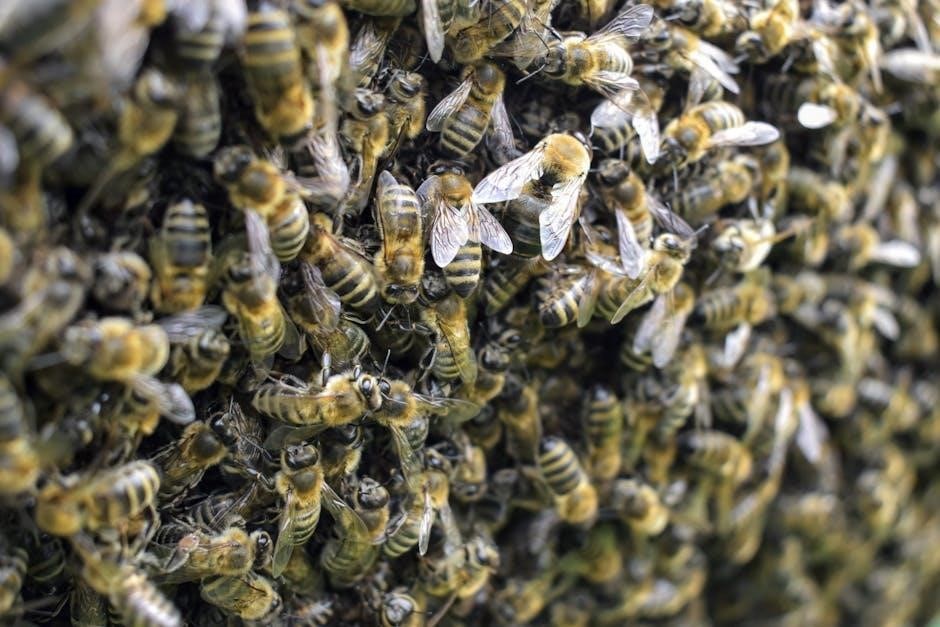
Bees are central to the novel’s symbolic landscape, representing far more than just insects producing honey. They embody the power of a collective, a thriving community where each individual has a vital role, mirroring the Boatwright sisters’ household and, ultimately, the wider African American community in South Carolina.
Lily’s journey parallels the bee’s life cycle – from a solitary existence to integration within a hive. The hive itself symbolizes a safe haven, a matriarchal society offering acceptance and nurturing. The bees’ diligent work ethic and cooperative spirit highlight the importance of collaboration and shared responsibility.

Furthermore, the process of metamorphosis – from larva to bee – mirrors Lily’s own personal transformation as she confronts her past and discovers her identity. The sting, while painful, represents necessary growth and the shedding of old selves. Ultimately, the bees symbolize resilience, healing, and the sweet rewards of belonging.
The Black Madonna: Religious and Spiritual Significance
The statue of the Black Madonna, Our Lady of Chains, serves as a powerful focal point for spiritual solace and female empowerment within the novel. Rooted in a history of marginalized worship, the Black Madonna represents a divine feminine force, offering a sanctuary for those excluded from mainstream religious institutions.
For the Boatwright sisters and the women of Tiburon, the Madonna is a symbol of resilience, healing, and ancestral connection. Her dark complexion challenges conventional depictions of religious figures, acknowledging the spiritual strength and beauty of Black women.
Lily’s interactions with the statue become pivotal moments of self-discovery and emotional release. The practice of leaving petitions at the Madonna’s feet demonstrates a collective yearning for comfort, forgiveness, and guidance. The Black Madonna, therefore, embodies a unique blend of Catholic tradition and African spirituality, fostering a sense of sacred feminine power.
Honey and the Production Process: Metaphor for Life

The intricate process of beekeeping and honey production functions as a central metaphor for life’s complexities within “The Secret Life of Bees.” Just as bees diligently collect nectar and transform it into honey, individuals navigate experiences – both sweet and painful – to create something meaningful.
August Boatwright expertly explains the bees’ work, mirroring the challenges and rewards of human existence. The collection of pollen, the building of the honeycomb, and the eventual creation of honey symbolize effort, collaboration, and the eventual sweetness that emerges from hardship.
Furthermore, the honey itself represents healing, nourishment, and the preservation of memory. The Boatwright sisters’ honey business embodies self-sufficiency and female entrepreneurship. Ultimately, the bees’ dedication to their craft offers Lily a profound lesson about resilience, transformation, and finding beauty in the everyday.

Narrative Structure and Style
Kidd employs a compelling first-person narrative, intimately revealing Lily’s evolving perspective, enriched by Southern Gothic elements and lyrical prose.
First-Person Narrative and Lily’s Perspective
The novel’s strength lies significantly in its choice of a first-person narrative, told entirely through the eyes of fourteen-year-old Lily Owens. This perspective isn’t simply a storytelling device; it’s fundamental to the emotional impact and thematic exploration. We experience the world with Lily – her confusion, guilt, longing, and gradual awakening.
This intimate viewpoint allows Sue Monk Kidd to skillfully reveal information as Lily uncovers it, mirroring her journey of self-discovery. The reader is privy to Lily’s internal monologue, her flawed interpretations, and her evolving understanding of the events surrounding her mother’s death and the racial tensions of 1964 South Carolina.
Because everything is filtered through Lily’s consciousness, the narrative gains a sense of immediacy and vulnerability, fostering a deep connection between the reader and the protagonist. It’s a subjective truth, colored by her experiences, making the story profoundly personal and emotionally resonant.
The Use of Southern Gothic Elements
Sue Monk Kidd masterfully employs elements of Southern Gothic literature within “The Secret Life of Bees,” enriching the narrative with atmosphere and thematic depth. The decaying grandeur of the Boatwright sisters’ pink house, a central location, immediately evokes a sense of faded glory and hidden secrets – a hallmark of the genre.
The novel features eccentric characters, a preoccupation with death (particularly Lily’s mother’s), and a sense of alienation and isolation, all common tropes. The exploration of the darker aspects of Southern history, including racial prejudice and social injustice, further solidifies its Gothic leanings.
However, Kidd subverts traditional Gothic tropes by infusing the darkness with hope and healing. The grotesque is balanced by the beautiful, and the haunting past ultimately leads to a path toward redemption and a reimagining of family. This blend creates a uniquely compelling and emotionally powerful reading experience.
Historical Context and Impact
Published in 2002, the novel powerfully reflects the turbulent Civil Rights era, sparking conversations about race, identity, and the enduring search for justice.
The Setting of 1964 South Carolina
The year 1964 in South Carolina serves as a crucial backdrop for the narrative, deeply embedded within the escalating Civil Rights Movement. This period witnessed intense racial segregation, systemic injustice, and burgeoning protests against discriminatory laws. Kidd meticulously portrays the palpable tension and prejudice prevalent in the South during this time, impacting every facet of life for both Black and white characters.
The rural landscape, specifically Tiburon, South Carolina, becomes more than just a location; it embodies a microcosm of the larger societal struggles. The novel doesn’t shy away from depicting the harsh realities of Jim Crow laws, the fear experienced by African Americans, and the resistance they faced when demanding equal rights. This historical specificity lends authenticity and weight to Lily’s journey, grounding her personal quest within a broader context of social upheaval and change. The setting isn’t merely where the story happens, but why it unfolds as it does.
The Novel’s Reception and Critical Acclaim
“The Secret Life of Bees” garnered significant praise upon its 2001 release, quickly becoming a New York Times bestseller and remaining on the list for an impressive period. Critics lauded Sue Monk Kidd’s evocative prose, her sensitive portrayal of complex themes like racial injustice and female empowerment, and the compelling narrative voice of Lily Owens.
The novel’s success extended beyond critical acclaim, attracting a wide readership and sparking numerous book club discussions. It was praised for its ability to address difficult historical issues with nuance and empathy, fostering dialogue about race, gender, and the search for identity. Later, the 2008 film adaptation, starring Dakota Fanning and Queen Latifah, further broadened the novel’s reach, though it received mixed reviews compared to the overwhelmingly positive reception of the book itself. Overall, the novel remains a celebrated work of contemporary American literature.