Beethoven’s Pathetique Sonata: A Deep Dive into the 2nd Movement
Beethoven’s captivating Pathetique Sonata’s second movement, Op. 13, is readily available as a PDF for pianists seeking to explore its beauty.
Numerous online resources offer free sheet music downloads, alongside paid options from established music publishers, catering to diverse preferences.

8notes.com provides free sheet music for violin, while other sites offer piano versions, allowing musicians to access this iconic piece easily.
Historical Context of the Pathetique Sonata
Ludwig van Beethoven, a pivotal figure transitioning from the Classical to the Romantic era, composed the Pathetique Sonata (Sonata No. 8 in C minor, Op. 13) around 1798-1799. This period marked a significant shift in musical expression, moving away from the structured formality of the Classical period towards a more emotionally charged and individualistic style.
The sonata’s publication in 1799 was a landmark event, quickly establishing its popularity and influence. While the availability of readily accessible sheet music PDF versions is a modern convenience, the initial dissemination relied on hand-copied scores and early printed editions. Beethoven himself was a revolutionary artist, imbued with the spirit of his time, and his compositions reflected this.
The Pathetique Sonata, and particularly its haunting second movement, Adagio cantabile, resonated with audiences seeking deeper emotional connection through music. The sonata’s success helped solidify Beethoven’s reputation as a composer of exceptional talent and innovation, paving the way for his future groundbreaking works. The initial publication of his first work, keyboard variations, occurred in 1783.
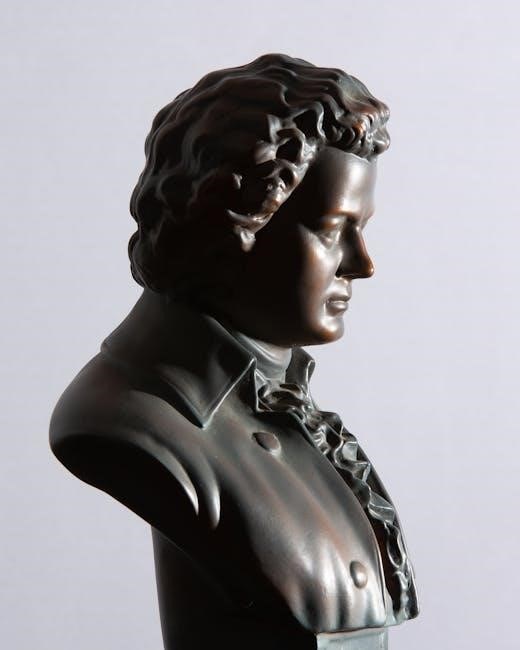
Beethoven’s Early Life and Musical Education
Ludwig van Beethoven was born in Bonn, Germany, and displayed remarkable musical aptitude from a young age. His father, Johann van Beethoven, initially served as his primary instructor, imposing a rigorous and demanding training regimen. This early education laid the foundation for Beethoven’s technical proficiency, though it was often harsh and emotionally taxing.
Later, Christian Gottlob Neefe became a crucial mentor, providing more nuanced and comprehensive musical guidance. Under Neefe’s tutelage, Beethoven’s compositional skills flourished, leading to the publication of his first work – a set of keyboard variations – in 1783. This early success foreshadowed the brilliance to come.
While the modern accessibility of sheet music PDF for pieces like the Pathetique Sonata’s second movement wasn’t conceivable during Beethoven’s formative years, his solid grounding in musical theory and practice enabled him to create enduring masterpieces. His education was intensive, preparing him for a revolutionary approach to music.
The Compositional Period of Op. 13
Beethoven completed Op. 13, encompassing the Pathetique Sonata, around 1798, a period marking a transition in his compositional style. This era saw him moving beyond the classical structures of his predecessors, hinting at the romantic sensibilities that would define his later works. The sonata was published in 1799, quickly gaining recognition for its emotional depth and dramatic flair.
Interestingly, the ease with which musicians today access sheet music PDF versions of the second movement – the celebrated Adagio cantabile – contrasts sharply with the distribution methods of the time. Original manuscripts and printed editions were far less accessible.
Beethoven’s revolutionary spirit was already evident, and the Pathetique Sonata exemplifies his willingness to experiment with form and expression. The availability of modern transcriptions allows contemporary pianists to study and perform this pivotal work, preserving its legacy for generations.
Understanding the 2nd Movement: Adagio Cantabile
Beethoven’s lyrical Adagio cantabile, widely available as a PDF, showcases his melodic genius and harmonic innovation for pianists worldwide.
Form and Structure: Sonata Form Analysis
Beethoven’s Adagio cantabile, often accessed via PDF sheet music, masterfully employs sonata form, a structure prevalent in the Classical era, yet imbued with his unique expressive voice.
The movement unfolds with an exposition presenting two contrasting themes – a serene, lyrical first theme and a more agitated, yet equally beautiful, second theme.
A development section then explores these themes, fragmenting and modulating them through various keys, showcasing Beethoven’s harmonic ingenuity, readily visible when studying the sheet music.
The recapitulation restates the exposition’s themes, now both in the tonic key, providing a sense of resolution.
Interestingly, some analyses note a rondo-like quality, an unusual characteristic for a second movement at the time, adding to the movement’s complexity and allure, all discernible through careful examination of the PDF.
The availability of sheet music allows for detailed analysis of this structural brilliance.
Melodic Characteristics of the Adagio Cantabile
The Adagio cantabile, beautifully represented in available PDF sheet music, is defined by its profoundly lyrical and expressive melodic lines. Beethoven crafts a primary melody of remarkable simplicity and elegance, characterized by stepwise motion and gentle phrasing.

This main theme, easily identifiable when studying the sheet music, evokes a sense of serene melancholy, a hallmark of the movement’s emotional depth.
Contrasting this is a secondary melodic idea, possessing a slightly more animated character, yet retaining the overall mood of introspective beauty.
Beethoven employs subtle ornamentation and delicate embellishments, enhancing the melodic contours and adding to the movement’s expressive power.
The melodic transformations throughout the development section, clearly visible in the sheet music, demonstrate his mastery of thematic variation.
Access to the PDF allows pianists to intimately explore these melodic nuances.
Harmonic Language and Key Signatures

The Adagio cantabile, as presented in readily available PDF sheet music, primarily resides in the key of A-flat major, lending it a warm and expressive tonal color. Beethoven utilizes a predominantly diatonic harmonic language, creating a sense of peacefulness and clarity.
However, he subtly introduces chromaticism, visible when examining the sheet music, to heighten emotional intensity and add harmonic interest.
Frequent use of appoggiaturas and suspensions contributes to the movement’s poignant and yearning quality.
The harmonic progressions, clearly laid out in the PDF, often feature gentle modulations to closely related keys, enriching the harmonic palette without disrupting the overall tranquility.
Beethoven’s skillful use of dominant and subdominant chords creates a sense of harmonic pull and resolution, guiding the listener through the emotional landscape.
Studying the sheet music reveals his sophisticated harmonic craftsmanship.
Tempo and Dynamics: Interpreting ‘Adagio Cantabile’
The marking ‘Adagio cantabile’ instructs performers to play the movement slowly and in a singing style, a nuance clearly conveyed through careful study of the sheet music PDF.
However, the tempo is not rigid; subtle rubato – a flexible approach to tempo – enhances the expressive quality, as indicated by dynamic markings within the PDF.
Beethoven employs a wide dynamic range, from delicate pianissimo passages to more assertive mezzo forte sections, all meticulously notated in the sheet music.
These dynamic contrasts are crucial for shaping the melodic phrases and conveying the movement’s emotional depth.
Interpreting the dynamics requires sensitivity and attention to detail, allowing the music to breathe and resonate.
The PDF sheet music provides a visual guide to these nuances, enabling pianists to unlock the movement’s full expressive potential.
A nuanced performance brings Beethoven’s vision to life.
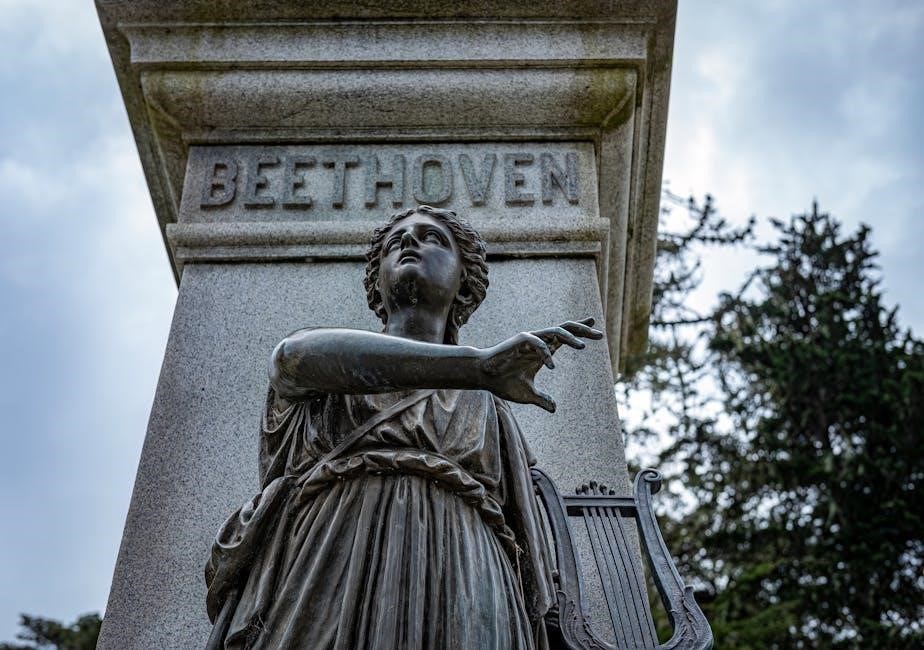
Locating and Utilizing Sheet Music
Beethoven’s Pathetique Sonata’s second movement sheet music PDF is widely accessible online, offering both free and paid options for pianists.
Availability of Pathetique Sonata 2nd Movement Sheet Music PDF
Finding a PDF version of Beethoven’s Pathetique Sonata’s second movement, Op. 13, is remarkably straightforward in today’s digital age. Numerous websites specialize in providing free sheet music, and this beloved piece is frequently available for download. 8notes.com, for instance, offers a version, though it’s geared towards violin arrangements. However, dedicated piano sheet music PDFs are also plentiful with a simple online search.
Beyond free resources, several platforms offer professionally typeset and edited versions for purchase. Musicnotes.com and Sheet Music Plus are popular choices, providing high-quality PDFs suitable for serious study and performance. These paid options often include additional features like adjustable playback speed and transposition tools. The availability ensures that musicians of all levels can access this iconic composition in a convenient and affordable format, fostering its continued performance and appreciation.
Free Online Resources for Sheet Music
Numerous online repositories offer free sheet music for Beethoven’s Pathetique Sonata’s second movement, Op. 13. Websites dedicated to public domain music, like the International Music Score Library Project (IMSLP), frequently host scanned copies of older editions. While the quality can vary, these resources provide accessible options for musicians on a budget. 8notes.com also presents a selection, though primarily focused on arrangements for instruments other than piano.
However, it’s crucial to exercise caution when downloading from unofficial sources. Ensure the website is reputable and the PDF is free from malware. Many free sites rely on user submissions, so accuracy isn’t always guaranteed. Despite these caveats, these platforms represent valuable starting points for accessing Beethoven’s masterpiece without financial commitment, enabling wider musical exploration and learning.
Paid Sheet Music Options and Publishers
For musicians seeking higher-quality, meticulously edited scores, several reputable publishers offer paid sheet music for Beethoven’s Pathetique Sonata’s second movement, Op. 13. Companies like Henle Verlag are renowned for their scholarly editions, providing accurate and reliable transcriptions based on original manuscripts. Schirmer and Alfred Music are also popular choices, offering a range of editions suitable for various skill levels.
Purchasing from established publishers ensures clarity, proper formatting, and often includes helpful performance notes and fingerings. These editions are typically available as PDF downloads or physical copies. While representing a financial investment, the enhanced quality and editorial integrity provide a superior learning and performance experience, benefiting serious students and professional pianists alike. These resources guarantee a faithful representation of Beethoven’s intentions.
Considerations When Choosing a Sheet Music Edition
Selecting the appropriate sheet music edition of Beethoven’s Pathetique Sonata’s second movement, Op. 13, requires careful consideration. Assess your playing level; some editions cater to advanced pianists, while others offer simplified arrangements. Examine the editorial markings – fingerings and pedal suggestions – ensuring they align with your technical abilities and interpretive preferences.
Prioritize editions from reputable publishers known for accuracy and scholarly rigor. Compare different versions, noting variations in notation and phrasing. A clear, well-formatted PDF or physical score is crucial for readability. Consider whether the edition includes historical context or performance notes, enriching your understanding. Ultimately, choose an edition that inspires confidence and facilitates a musically satisfying interpretation of this iconic piece.

Technical Aspects for Pianists
Mastering the Adagio Cantabile demands nuanced fingerings and delicate pedaling, crucial for conveying Beethoven’s expressive intent, as found in PDF scores.
Fingerings and Pedaling Techniques
Navigating the Adagio Cantabile requires careful consideration of fingerings, particularly in the arpeggiated passages, to ensure clarity and legato phrasing. PDF sheet music often lacks specific fingerings, demanding pianists to analyze the harmonic structure and melodic contours to determine optimal choices.
Pedaling is equally vital; subtle half-pedaling techniques create a wash of sound without obscuring the delicate melodic lines. Avoid excessive pedaling, which can muddy the texture. The goal is to enhance the harmonic resonance while maintaining a sense of intimacy.
Studying recordings of renowned pianists can offer insights into effective pedaling and fingering approaches. Experimentation is key, as individual hand sizes and preferences will influence the best solutions. Utilizing a well-edited PDF score, alongside analytical listening, will unlock the movement’s expressive potential.
Challenges in Performing the 2nd Movement
Performing Beethoven’s Adagio Cantabile presents unique challenges despite its seemingly simple structure. Maintaining a consistent, singing tone throughout the arpeggiated figures demands exceptional control and evenness. PDF sheet music, while providing the notes, doesn’t convey the nuanced phrasing essential for interpretation.
Balancing the melody with the accompaniment is crucial; the left hand should support, not overpower, the lyrical right-hand line. Achieving this requires careful voicing and dynamic control. The emotional depth of the movement necessitates a profound understanding of Beethoven’s intent.
Avoiding sentimentality is also key; the music should be expressive, but not overly dramatic. A clean, precise technique, informed by careful study of the PDF score and historical context, is vital for a successful performance.
Interpreting Beethoven’s Intentions
Interpreting Beethoven’s intentions in the Adagio Cantabile requires moving beyond simply playing the notes presented in the PDF sheet music. He was a revolutionary artist, and this movement, while seemingly serene, contains a depth of emotion and a subtle undercurrent of melancholy.
Understanding the historical context – Beethoven’s burgeoning deafness and personal struggles – can inform a more nuanced performance. The Pathetique Sonata marked a shift towards the Romantic era, emphasizing emotional expression and individual feeling.
Beethoven’s use of dynamics, phrasing, and harmonic language all contribute to the movement’s expressive power. A careful study of the PDF score, combined with research into his compositional style, allows performers to connect with the music on a deeper level, conveying his artistic vision authentically.
The Pathetique Sonata’s Legacy
Beethoven’s enduring masterpiece, accessible through readily available PDF sheet music, profoundly influenced the Romantic Era, inspiring countless composers with its emotional depth.
Influence on the Romantic Era
Beethoven’s Pathetique Sonata’s second movement, easily accessed via PDF sheet music, served as a pivotal bridge between the Classical and Romantic periods, profoundly impacting subsequent composers.
Its intensely expressive character, a departure from Classical restraint, foreshadowed the emotional depth and subjective individualism central to Romantic aesthetics. The availability of the sheet music allowed musicians to study and emulate Beethoven’s innovative harmonic language and lyrical melodic writing.
The movement’s dramatic contrasts and passionate intensity resonated deeply with Romantic sensibilities, influencing composers like Schubert, Chopin, and Liszt. The widespread distribution of the PDF facilitated the dissemination of Beethoven’s revolutionary ideas, solidifying its place as a cornerstone of the Romantic repertoire and inspiring generations of pianists.
The sonata’s emotional power, now readily available for study, helped define the Romantic emphasis on personal expression and artistic freedom.

Beethoven’s Revolutionary Approach to Music
Beethoven, a true musical revolutionary, challenged established norms, and the Pathetique Sonata’s second movement, accessible through PDF sheet music, exemplifies this spirit. He wasn’t merely composing; he was redefining musical expression.
The movement’s emotional depth and harmonic boldness, readily studied via the PDF, broke from Classical conventions, paving the way for the Romantic era. Beethoven imbued his work with a sense of personal struggle and triumph, a revolutionary concept at the time.
The availability of the sheet music allowed musicians to dissect his innovative techniques – the dramatic dynamic shifts, the expressive use of rubato, and the intensely lyrical melodies. This wasn’t just about notes on a page; it was about conveying profound emotion.
Beethoven’s approach, now easily accessible for analysis, inspired future composers to push boundaries and explore new sonic territories.
The 2nd Movement’s Enduring Popularity
The Adagio Cantabile from Beethoven’s Pathetique Sonata continues to captivate audiences centuries after its composition, and the widespread availability of its sheet music PDF fuels this enduring appeal.
Its profound emotional resonance, easily explored by pianists through the PDF, transcends cultural and temporal boundaries. The movement’s lyrical beauty and expressive depth make it a favorite among both performers and listeners.
The accessibility of the sheet music has democratized the experience, allowing countless musicians to learn and perform this iconic piece. Online resources and publishers offer various editions, catering to different skill levels.
This continued engagement ensures Beethoven’s masterpiece remains a cornerstone of the piano repertoire, a testament to its timeless quality and the power of readily available musical resources;

Resources for Further Study
PDF versions of the sheet music unlock deeper exploration, alongside biographies of Beethoven and academic articles analyzing his piano sonatas.
Recommended Recordings of the Pathetique Sonata
Exploring various recordings illuminates the nuances of Beethoven’s Pathetique Sonata, enhancing understanding even while studying the sheet music PDF.
Artur Schnabel’s historically informed interpretations offer profound insight, while Wilhelm Kempff’s recordings are celebrated for their lyrical beauty and clarity.
Daniel Barenboim’s performances showcase a dramatic intensity, and Maurizio Pollini’s recordings are known for their precision and intellectual rigor.
For a more contemporary perspective, Igor Levit’s interpretations are highly regarded, providing a fresh and compelling take on this classic work.
Listening to these diverse performances alongside studying the PDF sheet music allows for a comprehensive appreciation of Beethoven’s compositional genius and the movement’s emotional depth.
These recordings demonstrate the interpretive possibilities inherent within the score, enriching the learning experience for pianists and music enthusiasts alike.
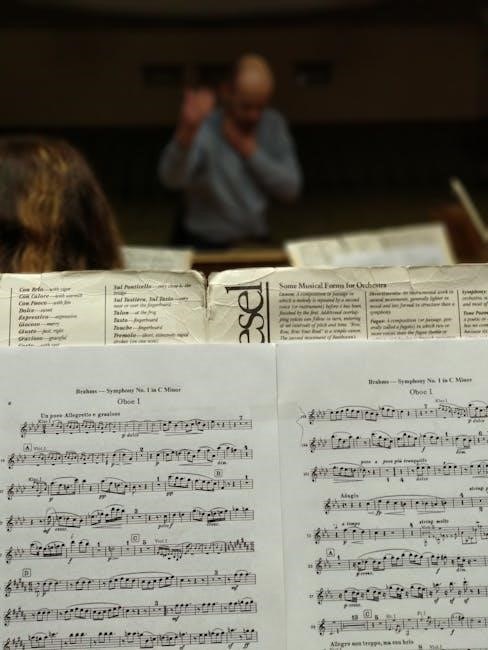
Biographies of Ludwig van Beethoven
Understanding Ludwig van Beethoven’s life profoundly enriches the experience of studying his music, including the Pathetique Sonata and its readily available sheet music PDF.
John Suchet’s biography provides a comprehensive overview of Beethoven’s life, detailing his struggles with deafness and his revolutionary artistic vision.
Jan Swafford’s biography offers a nuanced portrait of the composer, exploring his complex personality and the socio-political context of his work.
Edmund Morris’s biography delves into Beethoven’s early years, tracing the development of his musical talent from his upbringing in Bonn.
Exploring these biographies alongside the PDF sheet music reveals how Beethoven’s personal experiences and artistic ideals shaped the emotional depth and innovative structure of the Pathetique Sonata.
These resources illuminate the composer’s journey, fostering a deeper connection with his music and its enduring legacy.
Academic Articles on Beethoven’s Piano Sonatas
Scholarly analysis of Beethoven’s piano sonatas, including the Pathetique, provides invaluable insights for musicians studying the sheet music PDF.
The Journal of the American Musicological Society frequently features articles on Beethoven’s compositional techniques and the historical context of his works.
Music Analysis publishes detailed examinations of Beethoven’s harmonic language and formal structures, enhancing understanding of the Adagio Cantabile.
19th-Century Music offers perspectives on the reception and interpretation of Beethoven’s sonatas during his lifetime and beyond.
These articles often explore the relationship between the sheet music PDF and Beethoven’s intentions, revealing layers of meaning within the score.
Accessing these resources alongside the PDF allows for a more informed and nuanced performance, deepening appreciation for Beethoven’s genius.